


VMI SPOTLIGHT INTERVIEW // David Schnabellehner aka KADE - VMI Alumnus & Drum&Bass-Artist
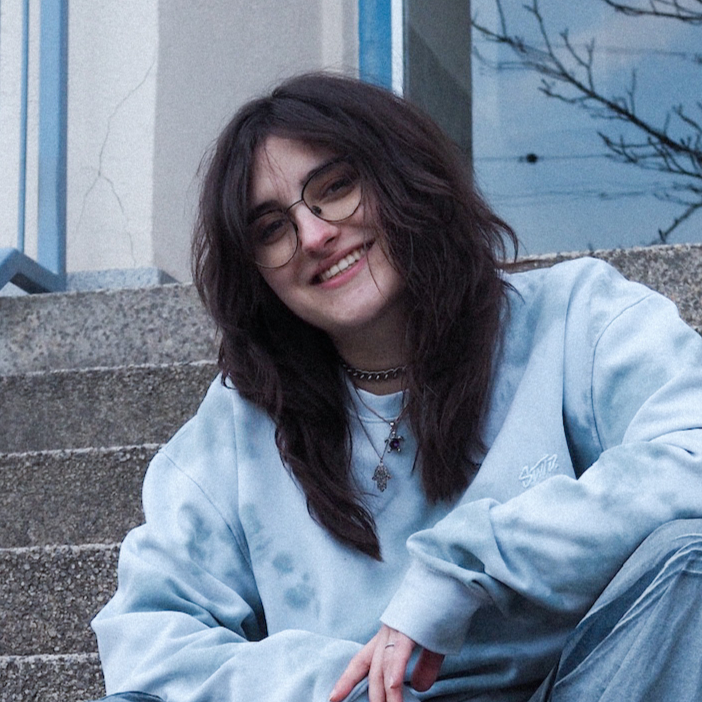

photo: © Alex Holzapfel
In this VMI Spotlight Interview, we introduce VMI alumnus David Schnabellehner, aka KADE. He studied Electronic Music & Sound Design at the Vienna Music Institute, laying the foundation for his journey as a producer and DJ in the drum & bass scene.
As KADE, he has increasingly made a name for himself in the Austrian and international drum & bass scene over the past few years. In addition to performing at festivals such as Donauinselfest, Electric Love Festival and Frequency Festival, his music has already gained recognition and support from established artists in the scene. UKF also named him one of their “Ones To Watch” for 2026.
In this interview, KADE shares insights into his musical journey, his time at VMI and the development of his artistic identity. He talks about perfectionism and the challenges of building a career in music, defining milestones along the way, and why having a clear workflow and developing an in-depth understanding of his tools have been essential in his journey towards creating a distinctive sound.
Before we talk about KADE, let’s go all the way back to the beginning: How did you first get into electronic music and drum & bass, and when did you realise that you wanted to produce music yourself rather than just listen to it?
First of all, thank you so much for inviting me. I’m really happy to be featured in this Spotlight edition.
If I go all the way back to the beginning, I must have been around 11 or 12 years old. My older cousin was already dabbling in music production at the time and was visiting us. I still remember so clearly standing in my childhood bedroom when he played Scary Monsters and Nice Sprites by Skrillex for me. That was the moment when I first had this feeling of: Okay, this is interesting.
Drum & bass came into the picture a few years later, when I was around 15. I had joined a new group of friends who listened to a lot of electronic music, including DnB. I immediately fell in love with the sound, and DnB became more than just a genre of music for me – it became a real passion.
Then I started DJ-ing in my bedroom, just for fun, without any kind of plan. But that’s really where it all began – that feeling of being part of it myself. And at some point, a few years later, when I was around 20 or 21, I had this thought: I don’t just want to DJ. I want to build this myself, to make my own music.
You studied Electronic Music & Sound Design at VMI. What made you decide to pursue this study programme, and what expectations did you have when you first started studying at VMI?
Studying music was actually a pretty natural progression from what I had been doing before. I was listening to music and DJ-ing in my room every single day, and eventually I reached this point where I realised: I don’t just want to consume or play music – I want to understand how it’s made.
After graduating from high school, I found myself at that classic point in life: What am I actually going to do with my life? I made a conscious decision to focus on music and came across the programme. I still remember reading through the curriculum and thinking: This is it. This feels right. I decided pretty quickly that I was going to take it completely seriously and really pursue this path.
My expectations for myself were relatively high from the beginning because, deep down, I had always known that I wanted to do this professionally. I even set myself a very specific goal at the start: to have my first release on what was then my dream label after graduating.
If I’m honest, though, things turned out a little differently than I had planned. Not worse – just slower and more realistic. But that was probably important too.
How much of the KADE sound we know today was already there during your time at VMI, and how much has your artistic identity evolved since graduating?
Honestly, I think I’m still at the point where I’m trying to figure out exactly what the “KADE sound” actually is.
What was already there during my time at VMI, though, was this ambition to create something of my own. I never wanted to simply recreate someone else’s sound. Even back then, it was important to me that it sounded clean, that it hit hard and that there was something distinctive about it – with a strong focus on sound design, synths and basses with character.
When I compare my music today to what I was making back then, the fundamental feeling behind it is actually still very similar. I’m still trying not to sound too generic, but instead to create something that has its own identity.
That said, I’d say I’m still in a pretty open phase creatively. I’m definitely not at the point where I’d say: This is my definitive sound now. I’m still evolving a lot, and I see it as more of a long-term process. I think it’s only over the next few years, through consistently releasing music, that it will really become clear where everything is heading.

photo: © Tim König
Looking back at your time at VMI, which skills, experiences or lessons shaped you most as a producer?
I really came into the study programme as a complete beginner. I had already listened to and played a lot of music, but technically speaking, I barely knew anything.
That’s why the first one or two years were the most formative for me. Everything was new – literally everything. Every sound, every technique, every plugin, every decision in the workflow. It was a very intense period because I felt like I was learning something every single day that I could immediately incorporate into my own music.
I think that phase shaped me the most because it showed me just how much goes into music production and how much depth there is to it. At the same time, it also gave me this curiosity that has stayed with me to this day.
You had already been active in the drum & bass scene for several years before releasing music as KADE, starting with your debut track “Glorp Business” in 2025. What made you wait until you felt ready to put your own music out there?
I’m just extremely perfectionistic. That’s a good thing in some ways, but it’s also something that holds me back sometimes. I’m rarely completely satisfied with what I make, which often means that projects end up “in the bin” somewhere along the way before they’re even finished, let alone release-ready.
That’s why it took me quite a long time to reach the point where I felt like I could actually put my music out there. And even that first step was really just a SoundCloud upload – not an official release.
I think having such high standards has helped me develop my sound, but at the same time, it has also meant that everything takes a little longer. My first proper official release is actually still to come, but hopefully it’ll be out soon – stay tuned. ;)
Your career has gained remarkable momentum in a relatively short period of time. When did you first feel that something was changing and that “I make music and play shows” was turning into “This could actually become my career”?
Honestly, that thought was there pretty early on. I’m someone who focuses very intensely on the things I’m genuinely interested in, and music has always been exactly that for me. I never really had a Plan B because I always had this feeling that this was my path.
But the first real moment when I noticed something was changing came around two years ago, when I signed a management contract. That was the point when it suddenly wasn’t just a hobby or a passion anymore – it started to have some structure around it.
And this year was another big step, when my music really started getting noticed and supported by bigger artists in the scene for the first time. Those are the kinds of moments when something shifts internally.
In 2025, you performed at Donauinselfest, and since then, further opportunities have followed, including Electric Love Festival and Frequency Festival. Which show has been your personal favourite so far? And how do you process milestones like these when they happen in such a short space of time?
Definitely Donauinselfest. Not necessarily because it was the biggest booking, but because emotionally, it had everything. It was my first big stage, my parents were there for the first time, a lot of my friends were there, and I really experienced the entire day consciously from beginning to end. It was one of those moments where, even while it was happening, I already knew: Okay, I’m going to remember this. And I’m sure that gig will remain one of my absolute highlights for a long time.
This year in general has been extremely intense. I’ve been travelling a lot, played several festivals and felt like I was constantly riding this “high”. And at some point, there’s naturally this contrast when everything quiets down again and you return to everyday life.
I think the most important thing is to consciously acknowledge what you’ve just experienced. Instead of immediately rushing on to the next thing, you need to take a moment to process those experiences and appreciate them.
UKF named you one of their “Ones To Watch” for 2026. What did it mean to receive that kind of international recognition at such an early stage of your career as a releasing artist?
Honestly, that came as quite a surprise. I wasn’t expecting it at all, which made me even happier about it. Especially because I hadn’t even had an official label release yet. It gave me a huge confidence boost because it was external confirmation that what I’m doing is resonating with people – internationally as well.

photo: © Alex Holzapfel
Camo & Krooked invited you and other up-and-coming Austrian producers to FM4 to showcase some of your unreleased tracks. What was that experience like for you – particularly receiving recognition from artists who have played such an important role in bringing Austrian drum & bass to an international audience?
Yeah, that was definitely one of my biggest highlights so far.
Camo & Krooked are absolute role models for me in drum & bass and, in my opinion, two of the best producers out there. Being invited onto their radio show to do an interview and present one of my own tracks was absolutely crazy for me and a huge honour. And to be honest, it was also pretty exciting to suddenly find myself interacting with them in that context as a fan.
It definitely gave me a huge push and showed me once again that the KADE project is moving in a good direction.
From the outside, a rapidly growing music career can look like a constant stream of releases, festival shows and exciting opportunities. What does your everyday life as KADE actually look like behind the scenes?
My everyday life is honestly pretty simple at the moment.
Right now, I’m focusing 100% on music. That means spending a lot of time in the studio, working on ideas, sounds and projects, and constantly trying to improve. There isn’t much else going on outside of that at the moment.
Eat. Sleep. Ableton. Repeat.
What has been the biggest challenge in building your career so far, and how have you learned to deal with it?
Honestly: myself.
My perfectionism is both my greatest strength and my biggest challenge. It pushes me to work extremely precisely, but it also means that I often spend much longer wrestling with things on my own than I really need to.
I’m still learning how to deal with that – to accept that sometimes “finished” is simply good enough and that not everything has to be perfect before you put it out there. That’s probably one of the most consistent learning curves throughout my entire development.
Finally, what would you tell students who are sitting in the same classrooms today where you once studied and dreaming of becoming professional artists? What advice would you give them, and what do you think they should start doing right now?
I think if you’re starting out as a bedroom producer today, social media is definitely an important factor when it comes to gaining visibility. You can achieve a lot with good marketing, and these days, things can happen relatively quickly.
At the same time, that’s not the part I personally place the most emphasis on. For me, the music itself is still at the centre of everything.
So my most important advice would be something practical from a production perspective:
Build a clear, small and streamlined set of tools early on.
Don’t overload your sample library with countless packs. Four or five really good, suitable packs are more than enough – and ideally, create some of your own sounds too. The same applies to plugins and synths: it’s better to understand one or two synths in real depth than to use ten of them only superficially.
Build a consistent workflow and really get to know your tools inside out. When you start working with the same sounds, the same routines and certain patterns, and keep developing or recycling them, certain characteristics will naturally begin to emerge in your music. Over time, that’s what creates a recognisable identity in your sound design.
If you really master your most important tools and consistently integrate them into your process, you’ll get to your own distinctive sound much faster – one that truly defines you as an artist.

photo: © Tim König
LINKS - KADE
Instagram: https://www.instagram.com/kadednb
SoundCloud: https://on.soundcloud.com/gkDjXUT6h2CRFvHt4F

Comments