


VMI SPOTLIGHT INTERVIEW // Bernd Brodträger aka BERNTH – VMI Alumnus, Gitarrist & Content Creator
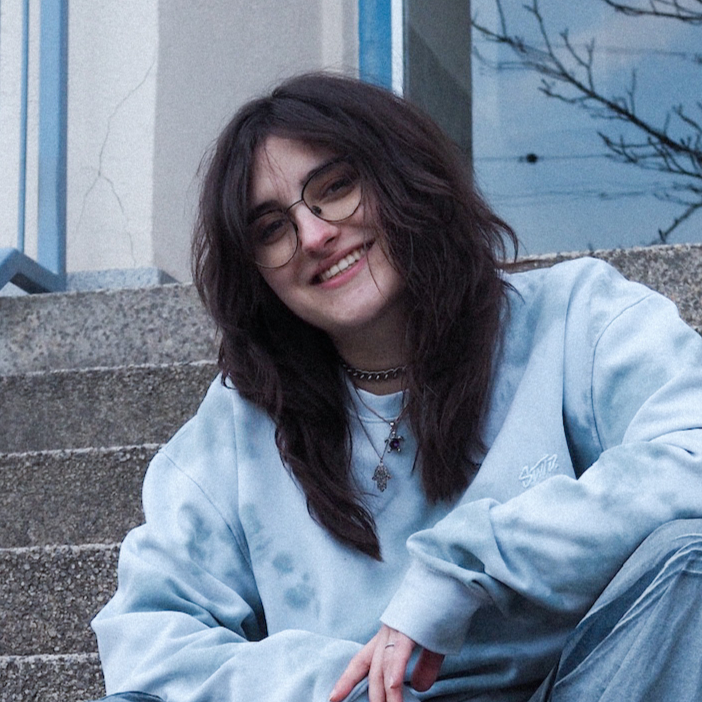

photo: © Rahel Gölzner
In this VMI Spotlight Interview, we introduce VMI alumnus Bernd Brodträger, better known as BERNTH. From 2012 to 2016, he studied Music Performance and Teaching Qualification Guitar at the Vienna Music Institute, graduating with distinction in both programs. Today, he is an internationally recognized guitarist who combines his career as a live and session musician with his own music, creative video productions, and digital music education.
As the longtime lead guitarist of Seiler & Speer, he has performed on some of Austria’s biggest stages, including a sold-out concert at Vienna’s Ernst Happel Stadium in 2025. At the same time, he built an international online presence under the name BERNTH, generating approximately 400 million views across his YouTube channels. Alongside collaborations with renowned artists and companies, he developed his own signature guitar with Ibanez and established a successful business in digital music education.
In this interview, BERNTH reflects on his musical journey, his formative years at VMI, and the development of his international career. He shares insights into building multiple professional ventures, overcoming personal challenges, and achieving major milestones. He also explains why professionalism, an entrepreneurial mindset, and financial independence are essential for a sustainable career in music, and why developing a unique artistic identity is among his most important pieces of advice for aspiring musicians.
Before we talk about your international career, let’s go all the way back to the beginning. How did you discover your passion for the guitar, which musicians inspired you the most at the time, and when did you realize that you wanted to pursue a professional career in music?
I started playing guitar when I was 13 years old. The main reason was Metallica. When I first heard their albums from the 1980s, especially Master of Puppets and Justice for All, I realized just how central the guitar riffs were to their music. Something about that really struck a chord with me. I desperately wanted to play those riffs myself and understand how it all worked. So I kept begging my parents for a guitar until they finally gave in. At first, they weren’t particularly enthusiastic about the idea because I had already started and abandoned quite a few other hobbies. They were understandably skeptical about whether I would stick with this one.
Eventually, I convinced them to buy me an inexpensive BC Rich guitar and a small Marshall combo amplifier. From that moment on, even at 13, I pretty much knew that I wanted to dedicate my life to music. I couldn’t imagine myself working in an office or pursuing a conventional career. All I knew was that I had to find a way to turn music into my profession.
From 2012 to 2016, you studied both Music Performance and Teaching Qualification (IGP) at VMI, graduating with distinction in both programs. Looking back on that time today, which experiences, encounters, or musical discoveries had the greatest impact on you, and how did your education prepare you for your future career?
The first thing that comes to mind when I think about my music studies is how unfamiliar so many things felt in the beginning. Especially in the music theory classes, there were several jazz guitarists who were significantly ahead of me in certain musical areas. At the time, for example, I knew very little about seventh chords, altered chords, or drop voicings. So once again, I had to catch up on a lot of things in a very short period of time just to keep up with everyone else.
Looking back, that was incredibly beneficial for me. When you always move within the same musical circles and exclusively collaborate with musicians from your own genre, you rarely get challenged in that way. Studying at VMI pushed me to step outside my familiar musical environment, discover new perspectives, and significantly expand both my creative horizons and my theoretical knowledge.
I’m convinced that these experiences played a major role in enabling me to work as a session guitarist across such a wide variety of genres today. From metal and rock to hip-hop, funk, jazz, and film music, I’ve worked in pretty much every style imaginable. Without the musical foundations and new ways of thinking I developed during my studies, I probably wouldn’t have achieved that level of stylistic versatility.
At this point, I’d also like to express my sincere gratitude to Conrad Schrenk, who was my main instrument teacher and, toward the end of my studies, also my ensemble instructor. He supported me tremendously throughout that journey and had a major influence on my musical development.
During and after your studies, you built a career as a live and session guitarist, working with artists including Seiler & Speer. How did you establish your first important professional connections, and what helped you build a sustainable career as a professional guitarist?
I toured with Seiler & Speer for around ten years before moving to Los Angeles. It was an incredibly exciting experience to grow alongside the project, going from small clubs to sold-out stadiums. One particular highlight was, of course, our completely sold-out concert at Vienna’s Ernst Happel Stadium in 2025.
Throughout those years, I constantly had to adapt to new challenges very quickly. As the stages grew bigger, the technical requirements became increasingly complex. For example, you transition from traditional stage monitors to in-ear monitoring, from conventional amplifiers to digital amp modelers, and suddenly you’re working with elaborate setups where every song requires numerous different sounds and presets. The technical production behind a show like that is far more complex than you might initially expect from an Austrian pop-rock band. I certainly learned an incredible amount during those years.
When it comes to building professional connections, one thing has always been particularly important to me: professionalism and reliability. From the very beginning, I tried to work with as many producers as possible, always be thoroughly prepared, be the first person to arrive at the studio and the last to leave. Not complaining, not creating unnecessary problems, and simply being someone other people genuinely enjoy working with.
Musicians sometimes have a reputation for being difficult or acting like divas. In my experience, you can already set yourself apart simply by being easy to work with, reliable, and professional. When producers are looking for musicians for a new project, they primarily think of people they’ve had positive experiences with before.
That’s exactly what happened with Seiler & Speer. I had previously recorded several albums and other projects with producer Daniel Fellner. Our collaboration had always worked extremely well, so when the lead guitarist position became available, he thought of me and gave me a call.
This principle has followed me throughout my entire career. I’ve encountered many fantastic musicians in the studio who were technically outstanding but unfortunately didn’t behave very professionally. More than once, a producer has said to me after a session like that, “I’m definitely never calling that guy again.” To me, that shows that musical ability alone isn’t enough. It’s just as important to be someone others enjoy working with and can always rely on.

photo: © Anabel DFlux
In 2018, you started publishing guitar videos on YouTube under your artist name BERNTH. Today, you reach millions of people and have established an internationally recognized artistic identity. What originally motivated you to start your channel, and how did you develop your distinctive style, combining exceptional guitar technique with creative concepts, entertainment, and music education?
I originally started my YouTube channel because I wanted to explore my own guitar technique in greater depth. My music studies had given me an incredible amount of theoretical knowledge, but virtuosic playing technique had never really been a major focus at VMI.
Conrad Schrenk had shown me some valuable things, but when it came to specific technical questions, I had to figure out a lot on my own. How can I optimize my pick grip? How can I keep my fingers as close to the fretboard as possible? How do complex techniques like sweep picking, economy picking, or extremely fast alternate picking actually work? These were all questions I wanted to explore much more intensively after graduating.
At the same time, I barely had any friends in my personal circle who shared my level of enthusiasm and attention to detail when it came to guitar playing. That’s when I came up with the idea of building an online community where I could connect with like-minded people. Initially, I simply uploaded videos about my own exercises, practice routines, and technical discoveries. I quickly realized that this content was also incredibly helpful to many other guitarists. As a result, the channel grew steadily during its early stages.
Things really exploded a few years ago when I started combining my own music with unusual video concepts. For example, I played an entire song underwater or experimented with putting water inside an acoustic guitar to find out how it would affect the sound. I also started using creative thumbnails and video titles that attracted attention beyond the guitar community. That was a major turning point for me. Suddenly, I wasn’t just reaching guitarists and musicians anymore, but also people who simply enjoyed music and extraordinary creative ideas.
By combining guitar content, my own music, and experimental video concepts, I was able to expand my reach enormously. Across my YouTube channels, I’ve now generated approximately 400 million views in total.
Alongside your own music and live performances, you’ve built several professional ventures through online guitar lessons, digital products, and collaborations. How did this business model develop, and how important do you think it is for musicians not to depend exclusively on concerts or individual gigs?
Alongside my career as a musician and content creator, I’ve built a business focused on digital music education and online learning. I primarily use platforms like Patreon and Kajabi for this. It all started with a relatively simple project: my first online guitar course, 10 Steps to Modern Shredding. Over the years, that developed into a substantial business that now offers several hundred different learning products.
Around 20 people currently work for me across a wide range of areas, including customer support, video editing, email marketing, copywriting, paid advertising campaigns, and sales.
Especially in the beginning, managing all these responsibilities simultaneously was a major challenge. I still vividly remember spending practically every free minute on my laptop while touring, trying to build the business on the side.
As the company grew, however, I was able to delegate more and more responsibilities. Today, this part of my business only takes up about one day of my working week. On that day, I have meetings with my head of sales, who works full-time for my company, among other things. Just like my other projects, this structure developed gradually over many years.
The original idea was to build as many different professional income streams as possible. Ultimately, I don’t want to limit myself to just one area. I don’t want to spend all my time touring and playing 300 concerts a year like some of my friends and colleagues. But I also don’t want to spend the entire year sitting in my YouTube studio producing videos.
For me, the variety is what makes it exciting. After a long tour, I can’t wait to get back into the studio and work creatively. But if I’ve been home for too long, I start craving the stage and life on tour again. My different projects allow me to combine all these passions. The concept has also proven very successful financially. For a long time, I was the world’s largest music creator on Patreon, and through the platform, I’ve been able to reach and support around 30,000 people with my educational content. We’re now moving in a similar direction with Kajabi. In the past few months alone, we’ve sold around 4,000 digital learning products there. Our offerings range from smaller, specialized practice packages to comprehensive 90-day intensive programs.
For me, this company isn’t just an additional source of income. Above all, it’s a way to combine my passion for guitar playing and music education with a sustainable, long-term career as an artist.
Another major milestone in your career is your own Ibanez signature guitar, which you developed together with the renowned guitar manufacturer. How did this collaboration come about, which of your personal ideas and preferences influenced the instrument’s development, and what does this achievement mean to you?
My first signature guitar, the Ibanez BER10, was released last year. From the initial conversations to the actual launch, the process took around two years. It was a very intensive development process because creating an instrument like this involves making countless decisions and balancing different requirements.
For example, it was important to me from the very beginning that the guitar would remain affordable for as many people as possible. A large part of my audience consists of young guitarists, and I wanted to create an instrument that my viewers could actually afford. At the same time, I wanted to play this exact model myself, both on stage and in the studio. So it absolutely couldn’t be just an entry-level guitar. Finding that balance naturally required some compromises.
One particularly exciting part of the project was working with Fishman. Together, we developed special pickups for the BER10 that are used exclusively in my signature guitar. I had very specific ideas about how the instrument should sound. Since I work in many different musical genres and get hired for a wide variety of productions, I need a guitar that’s as versatile as possible while still delivering my personal sound. I’m actually not much of a guitar collector at all. Ideally, I prefer having one instrument I can rely on that covers as many musical situations as possible.
The release was definitely a huge personal milestone for me. Suddenly seeing my own guitar featured in major music magazines and displayed in music stores was a pretty special feeling. I still vividly remember admiring the signature models of my idols when I was a kid, especially those of the guitarists from Metallica and Megadeth. I even owned one of those Megadeth signature guitars myself back then. The fact that I now have my own model on the market is something I could hardly have imagined as a teenager.
What makes me particularly happy, though, is seeing videos of other guitarists playing my guitar and tagging me in them. That’s almost even more exciting to me than seeing the instrument in a store. I’ve been working with Ibanez for over ten years now, but the BER10 is my first signature guitar. And I’m confident it won’t be the last. The first production batch sold out pretty quickly, and I think we’ll be working on more exciting projects together in the future.

photo: © Anabel DFlux
From the outside, your career looks like an impressive success story. What setbacks, uncertainties, or difficult decisions have you faced along the way, and what have you learned from them?
Of course, there have been major setbacks and periods of uncertainty throughout my career.
When you follow a musician’s journey on Instagram or other social media platforms, you usually only see the highlights: the sold-out concerts, the huge stages, and the special achievements. What goes on behind the scenes and the difficulties people have to overcome along the way often remain invisible. That’s why I’ve always tried to speak openly about the less glamorous aspects of my life and career as well. One example is that I’ve now been completely sober for seven years.
When my career really started taking off and we were playing increasingly large venues with Seiler & Speer, it was obviously an incredibly exciting time. As a young musician, suddenly performing in dream venues like the Wiener Stadthalle in front of sold-out crowds was an amazing feeling. However, I was definitely partying too much back then. That lifestyle wasn’t particularly beneficial for my health, my relationship, or my professional development. At some point, I realized that I needed to make a fundamental change. Ever since taking that step, practically every aspect of my life has improved significantly.
Another major challenge was financial uncertainty, especially during my studies at VMI. Back then, if a tour was canceled, for example, I sometimes didn’t know whether I’d be able to pay my rent the following month. That’s why I took on several call center jobs alongside my music studies. Between university, work, and music, I was practically busy around the clock. Despite all that, there was barely anything left at the end of the month. After all, I had to pay for my apartment, tuition fees, and occasionally new equipment or other necessary purchases.
That period had a lasting impact on me. I realized that I didn’t want to spend my entire life being financially dependent on a single concert, tour, or booking. I wanted to build a future where I could fully focus on my music without constantly worrying about whether I’d be able to pay my bills the following month. That’s exactly where my motivation to develop multiple professional and financial income streams came from. I didn’t want to rely exclusively on live concerts. I also wanted to build long-term success through my own music, my YouTube channels, and my educational offerings. Fortunately, today I’m in a position where I no longer have to worry about those basic financial concerns. And of course, I hope it stays that way.
Looking back, those difficult periods were incredibly important because they motivated me to approach my career not only creatively, but also from an entrepreneurial and long-term perspective.
Today, you’ve become a major role model for many young guitarists and musicians. In fact, some VMI students have chosen to study with us partly because of your career and your connection to the institute. What does it mean to you to know that your journey now inspires others to pursue their musical goals?
I often talk to young musicians, especially while touring, who have consciously decided to pursue a professional career in music. And I think that’s fantastic. With most of them, I get the impression that they have a very realistic understanding of what that path involves.
They know that earning a music degree alone doesn’t guarantee that they’ll become successful professional musicians, earn a good living, play major concerts, or build a large fan base. Most of them understand that it takes an incredible amount of hard work, perseverance, and, of course, a bit of luck along the way. Despite all that, they still choose to pursue this path. And that’s exactly the kind of determination I admire.
I grew up in an environment where art and creativity didn’t really play a role professionally. Of course, there were people in my family who loved music, but nobody had ever pursued an artistic career themselves. So when I started playing guitar and writing my own songs, the general attitude was always the same: “That’s a nice hobby, but you’ll never be able to make a living from it. You need a real job.” Looking back, I find that pretty funny, of course. I still enjoy teasing my parents about it when they visit me in West Hollywood or when we go out for dinner somewhere in Beverly Hills.
But of course, there was also some truth to their skepticism at the time: there really is no guarantee that a career in music will work out. And that’s probably the most important message I want to share with young musicians. I know how motivated you are when you first start studying music and how hard you work toward finally holding your diploma in your hands. However, some of my fellow students back then had the impression that graduating would suddenly open every door and that producers, bands, and concert promoters would simply be waiting to hire them.
The reality, of course, is different. Getting your diploma doesn’t mean you’ve made it. Often, the real work only begins afterward. At the same time, I’m convinced that in many ways, it’s easier today than ever before to build your own career. We live in a time when musicians have an incredible number of opportunities to take initiative and shape their own futures. You no longer necessarily need a major record label, a powerful manager, or someone who happens to discover you.
Platforms like YouTube, Instagram, and TikTok give us tools to present our music, skills, and personalities to a worldwide audience. And the exciting thing is that you never know who’s watching on the other side. Maybe a producer sees your video and later hires you for a major studio production. Maybe a band discovers you while looking for a guitarist. Or maybe your own music reaches people all over the world, allowing you to gradually build your own fan base.
Many of the greatest opportunities in my career came about in exactly this way. That’s why I would advise every young musician not to wait for someone else to give them an opportunity. Take initiative, put your work out there, build connections, experiment as much as possible, and continuously work on improving your skills. There’s no guarantee of success, but today we have more opportunities than ever before to take control of our own musical destinies.
What experiences, insights, or personal advice would you like to share with our current students, and what would you recommend to help them find their own path in the music industry and turn their musical dreams into reality?
My biggest recommendation is still to build as many different professional income streams as possible and not put all your eggs in one basket. For me personally, this versatility isn’t just creatively fulfilling; it also provides an enormous amount of freedom.
For example, if I don’t want to go on tour for an entire year, I can afford to make that decision because I’m not exclusively dependent on live performances. There are many bands that have to tour every year just to make ends meet. As a result, they accept practically every offer, keep playing the same festivals, and sometimes find themselves moving further down the lineup year after year.
Other artists, on the other hand, can afford to consciously take a break, stop touring for a year or two, or go a longer period without releasing an album. Instead, they can focus their energy on creating something truly extraordinary and then return with a strong new release.
This kind of artistic freedom becomes possible primarily when you’re not financially dependent on a single source of income. That’s why I believe it’s incredibly important to start building multiple income streams early on.
Of course, I know that most musicians would prefer to simply play their instruments. In a perfect world, that would probably be enough. But the reality of today’s music industry is different. That’s why I would recommend that every aspiring professional musician also explore areas that might initially seem unrelated to actually making music. These include social media algorithms, video editing, music production software, digital advertising, and online marketing. You don’t have to become an expert in every single one of these areas, but having a basic understanding can make an enormous difference. Especially today, we have countless opportunities to shape our own careers if we’re willing to engage with the business side of music as well.
Another important question for me is: What actually makes me special? What can I offer the world that sets me apart from other musicians? This realization was also crucial to my own development. During my studies, I initially tried to keep up with the jazz guitarists and play just like them. The problem was that jazz had never really been my greatest passion. As a result, I usually sounded like a mediocre jazz guitarist trying to imitate something that other people could do much better. Things only started to change when I began consciously incorporating my own musical strengths.
I moved more toward fusion and started bringing in the virtuosic melodic lines and technical elements I was already very familiar with from metal. Suddenly, my playing had its own identity. I was no longer trying to sound like someone else. Instead, I was combining my personal strengths with the new musical influences I had discovered during my studies. That was exactly when my performance began to improve significantly, and I eventually graduated from both programs with distinction.
This experience has stayed with me throughout my entire career. Whenever I’ve focused on being as authentic as possible and highlighting my own strengths, the best opportunities have come my way.
So my most important advice to everyone reading this would be: Don’t try to become the second-best version of another musician. Find out what makes you unique, continue developing those strengths, and build your own musical identity around them. Because in the long run, it’s precisely that individuality that sets you apart from others and makes people want to listen to your music, watch your videos, or hire you specifically for a project.

photo: © Rahel Gölzner
LINKS - BERNTH
Tour Dates & Tickets: https://linktr.ee/escapetheinternet
Instagram: https://www.instagram.com/bernthofficial
Linktree: https://linktr.ee/bernth


Comments